Get to Know Hamamatsu
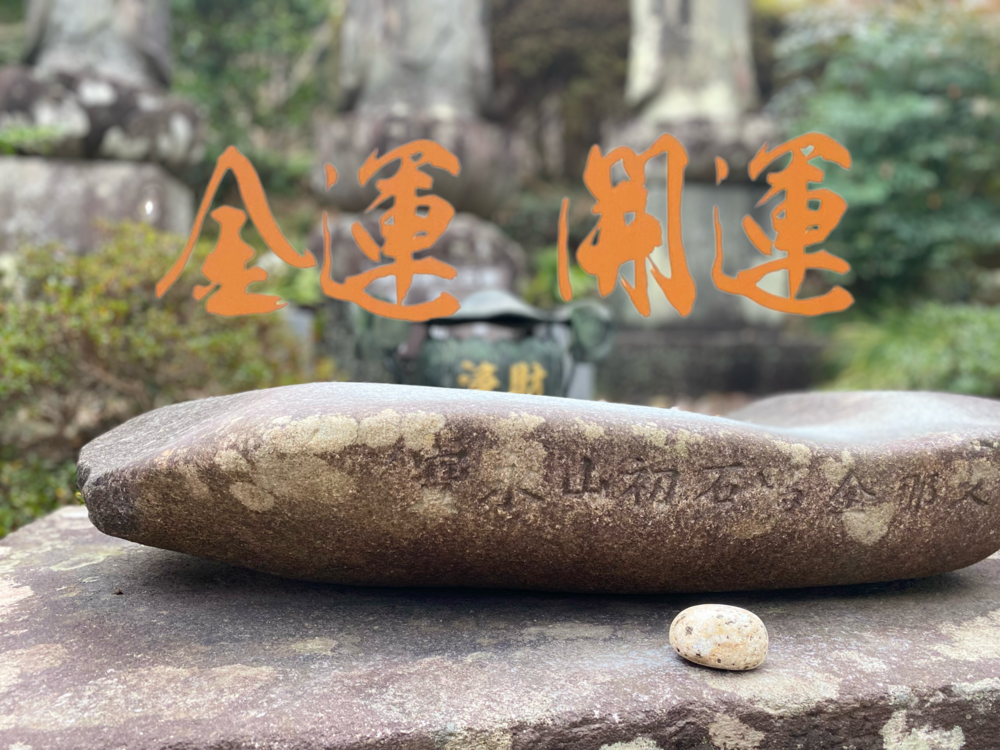

Hamamatsu’s top lucky spot for wealth & prosperity! Shosan Hōrin-ji Temple — take home a good-luck amulet as a souvenir!
We visited Shosan Hōrin-ji Temple—known as a “lucky spot for wealth and prosperity”—and spoke with the head priest.
This article was created on February 5, 2024.
Known as one of the most popular lucky spots for wealth and prosperity in Hamamatsu City
Syosan Hōrin-ji Temple 初山宝林寺
It is said that after receiving a prayer ritual, ringing the Kinmei Stone, and then purchasing a lottery ticket, a series of high-value winners have appeared.
Because of this, even major lottery retailers are said to visit regularly, and some people also report that their business has started to run more smoothly…
Haven’t heard of it yet? This is definitely a spot worth knowing.
We visited Shosan Hōrin-ji Temple—known as a “lucky spot for wealth and prosperity”—and spoke with the head priest.
Shosan Hōrin-ji Temple
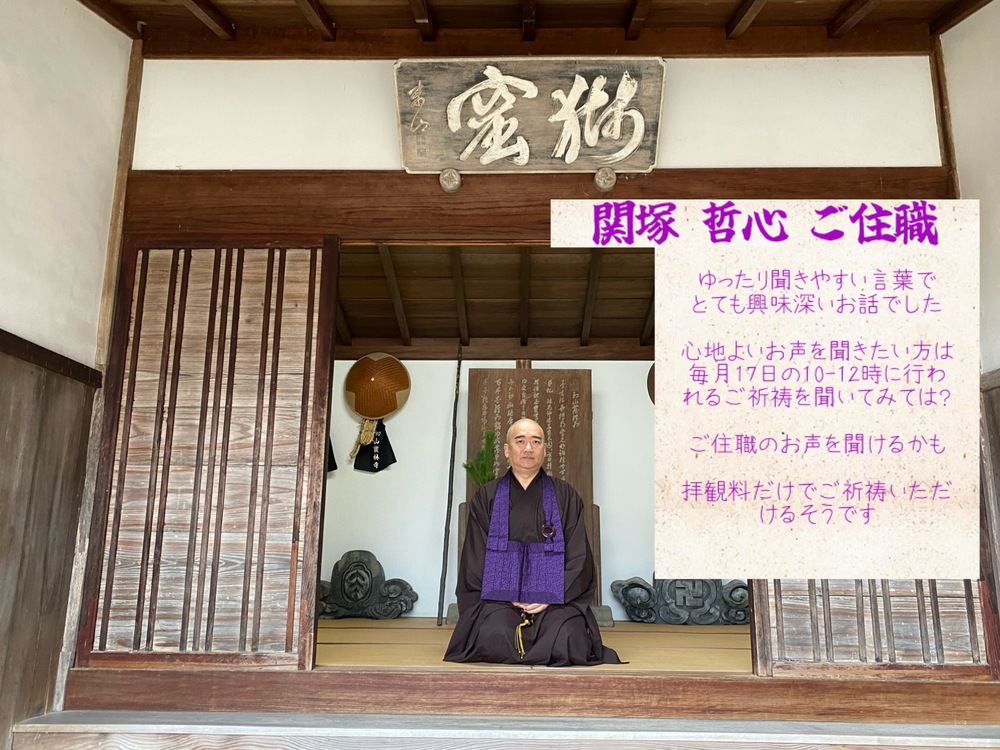
Today, Shosan Hōrin-ji Temple is known as a place associated with good fortune and prosperity, but it was originally home to the Ryūbundō Hall, enshrining a fire-protecting deity.
So how did it come to be regarded as a “lucky spot” for wealth and good fortune?
Before getting into that story, let’s start with a brief look at the temple’s history.
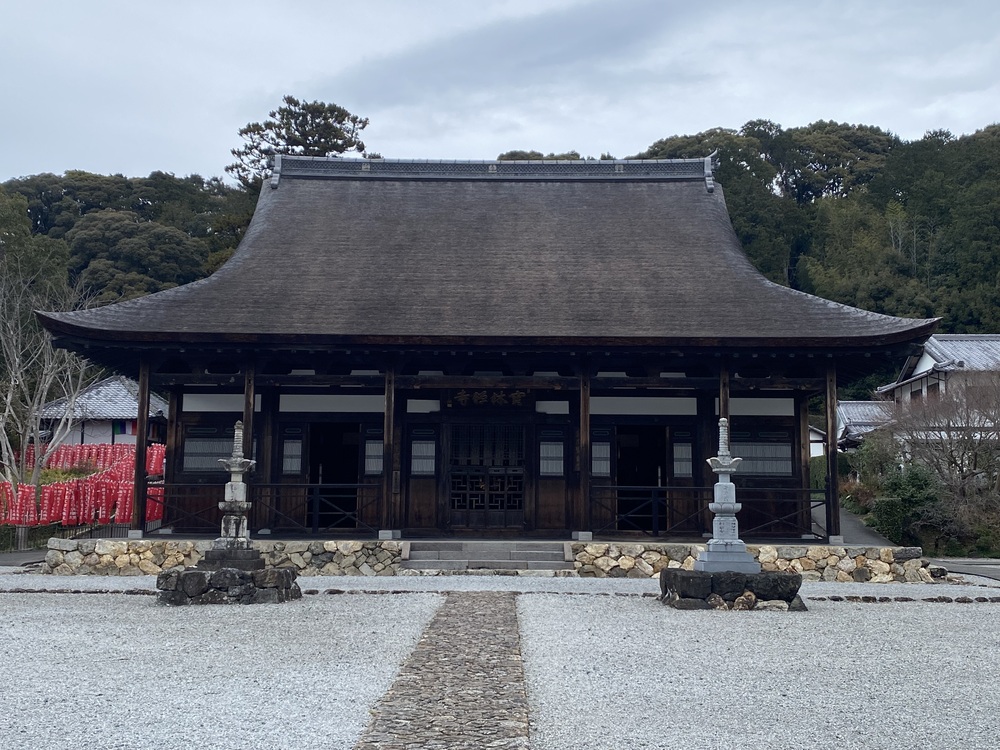
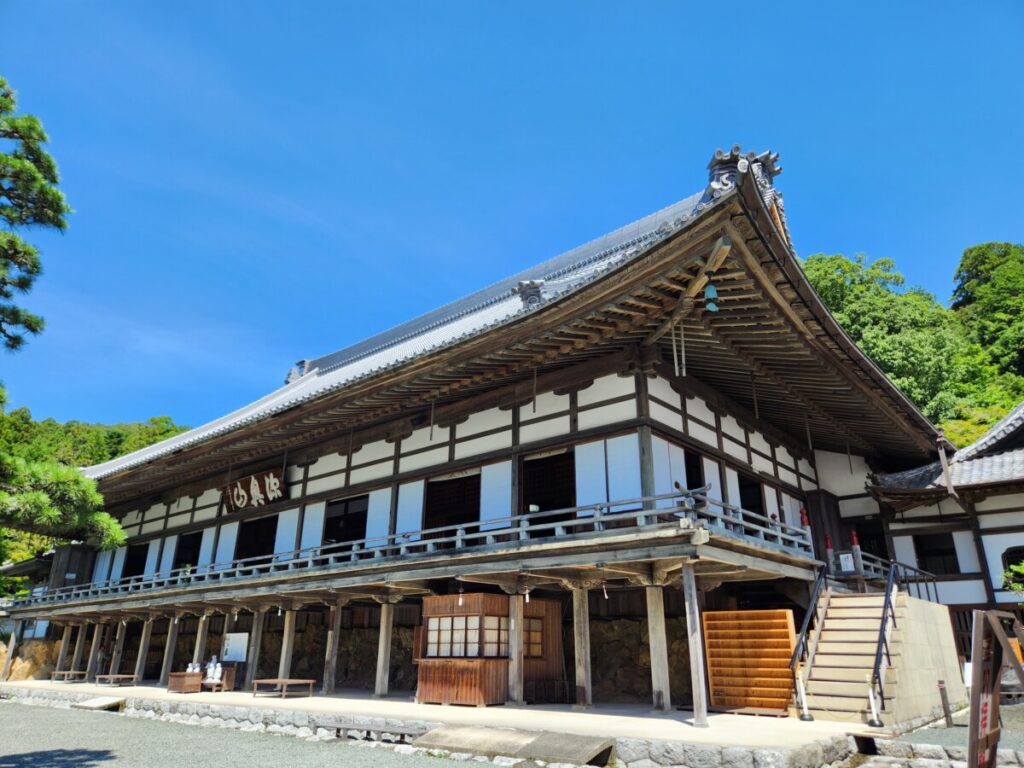
The main hall is designated as an Important Cultural Property of Japan.
There are 13 Buddhist sects in Japan, and Hōrin-ji belongs to the Ōbaku school of Zen Buddhism.
The Ōbaku sect was introduced to Japan about 370 years ago by the Chinese Zen master Yinyuan (Ingen).
He is also well known in Japan for bringing the kidney bean (ingen-mame) to the country.
When Zen Master Ingen was invited to Nagasaki, he came to Japan accompanied by dozens of his disciples.
In 1664, one of his disciples, Zen Master Dokutan, became the first founding abbot of the temple. Because of this, the temple was given the mountain name “Shosan,” meaning “first mountain.”
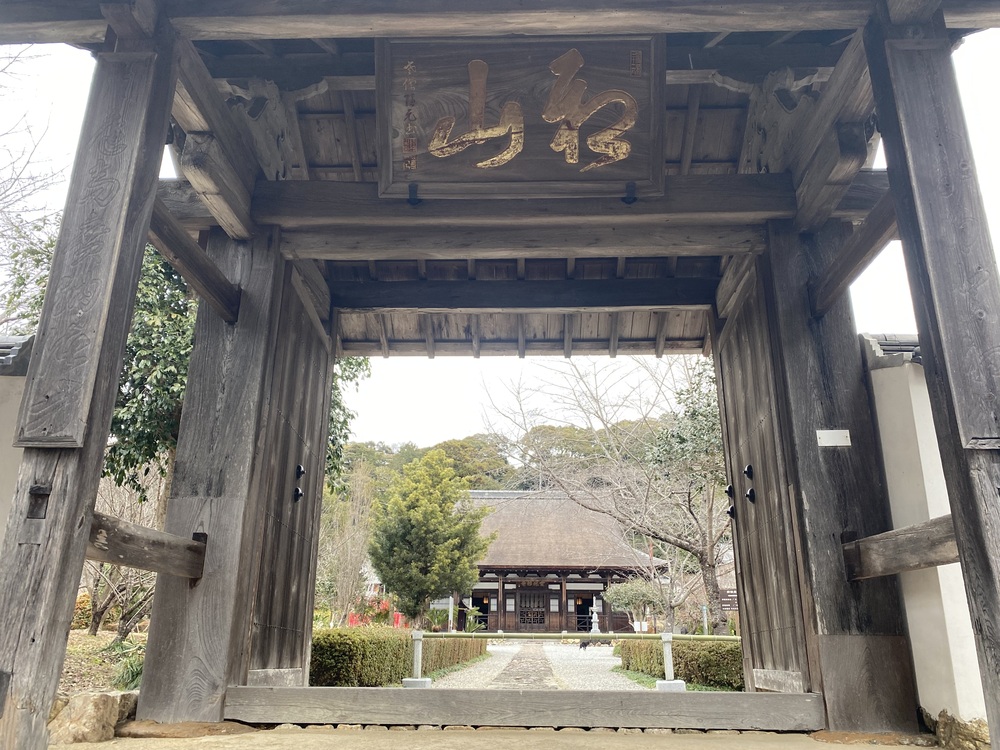
The temple gate is designated as a tangible cultural property by Shizuoka Prefecture.
It is also the family temple (bodai-ji) of the Kanasashi Kondo and Kiga Kondo families, who served the Tokugawa family across generations.
This area was once governed by descendants of the Kondo family, which split into five branches.
Among them, it was Noborinosukesadamochi of the main Kanasashi Kondo family who invited Zen Master Dokutan, marking the beginning of Shosan Hōrin-ji Temple.
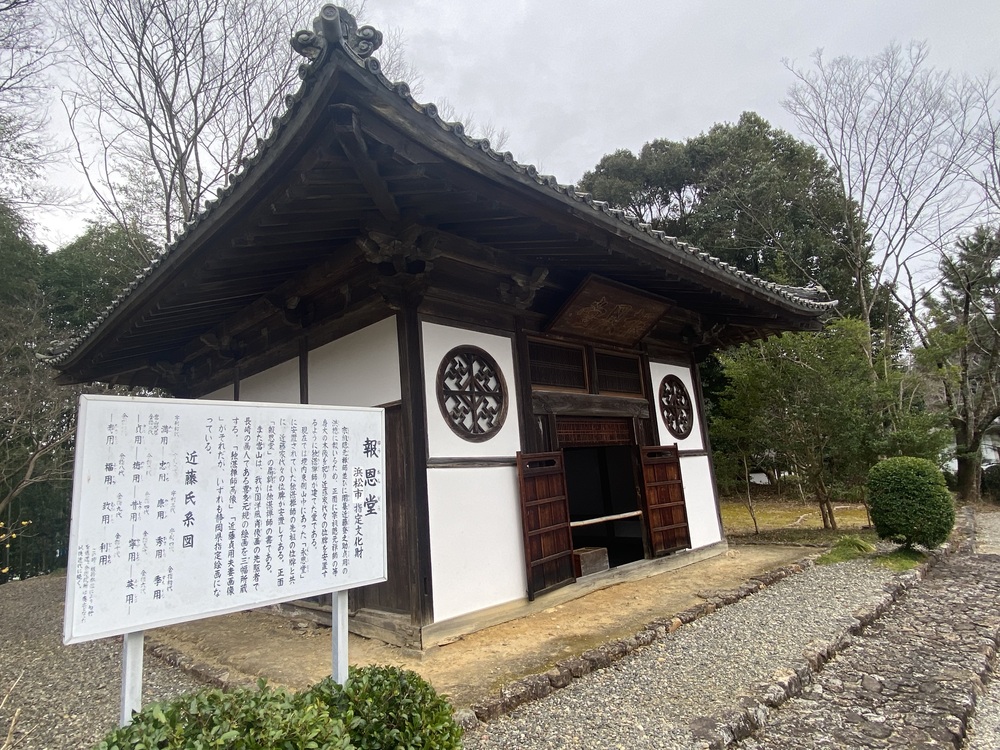
So how did Hoshinsan Hōrin-ji Temple come to be known as a place for good fortune and prosperity?
The temple was founded in 1664 and developed as the family temple of the Kondo family, as well as a training monastery for the Ōbaku Zen tradition.
It flourished as a center of Ōbaku culture in the Enshū region (western Shizuoka Prefecture).
However, over the long course of history, there were also periods when the temple declined and fell into disrepair.
In the Heisei era, Rev. Sekizuka became the head priest and revived the annual observance for Ryūmonbō, which had been discontinued after the war.
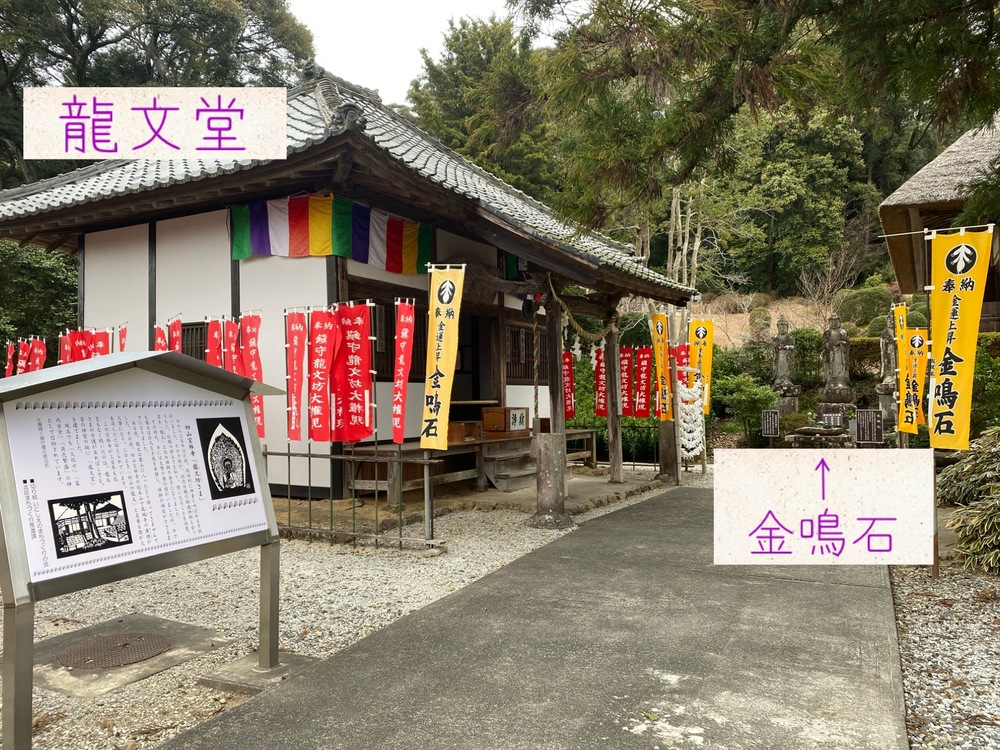
At the time it was revived, a festival was held, and amulets that had been blessed through prayers at Ryūbundō Hall—where the fire-protecting deity is enshrined—were distributed to local shops to encourage people to visit.
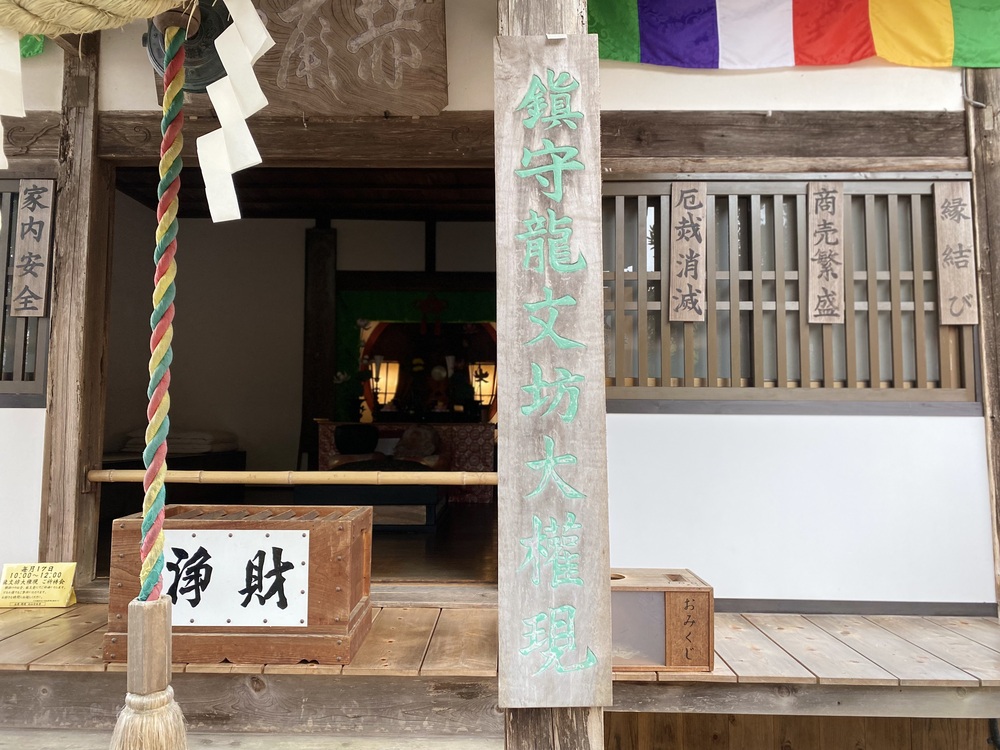
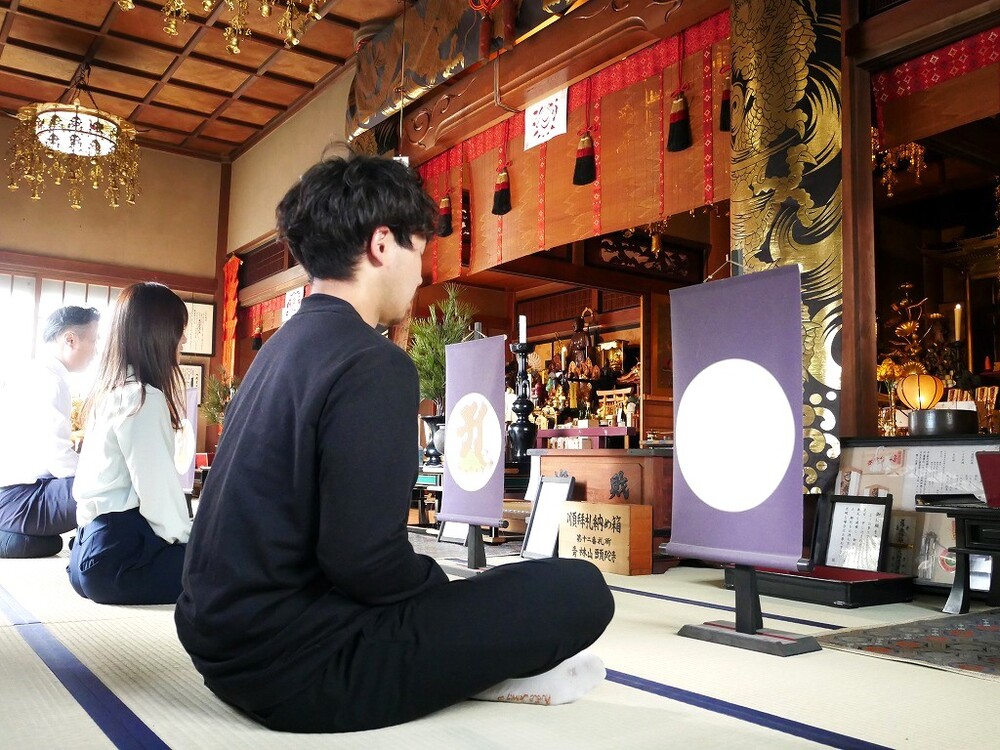
After receiving prayers at Ryūbundō Hall, the Kinmei Stone located just to its right is rung.
As a result, local shops and businesses are said to have begun running much more smoothly and successfully.
This story gradually spread, and before long, people began visiting the temple before buying lottery tickets—offering prayers, making a wish, ringing the Kinmei Stone, and then purchasing tickets.
As a result, a growing number of people reportedly won large lottery prizes.
Hearing these stories, even lottery retailers themselves began visiting the temple regularly, hoping for high-value winning tickets from their stores.
The story eventually reached the headquarters of a major nationwide lottery retailer chain, and as a result, Shosan Hōrin-ji Temple began officially conducting prayers for the envelopes used to hold lottery tickets at that sales location.
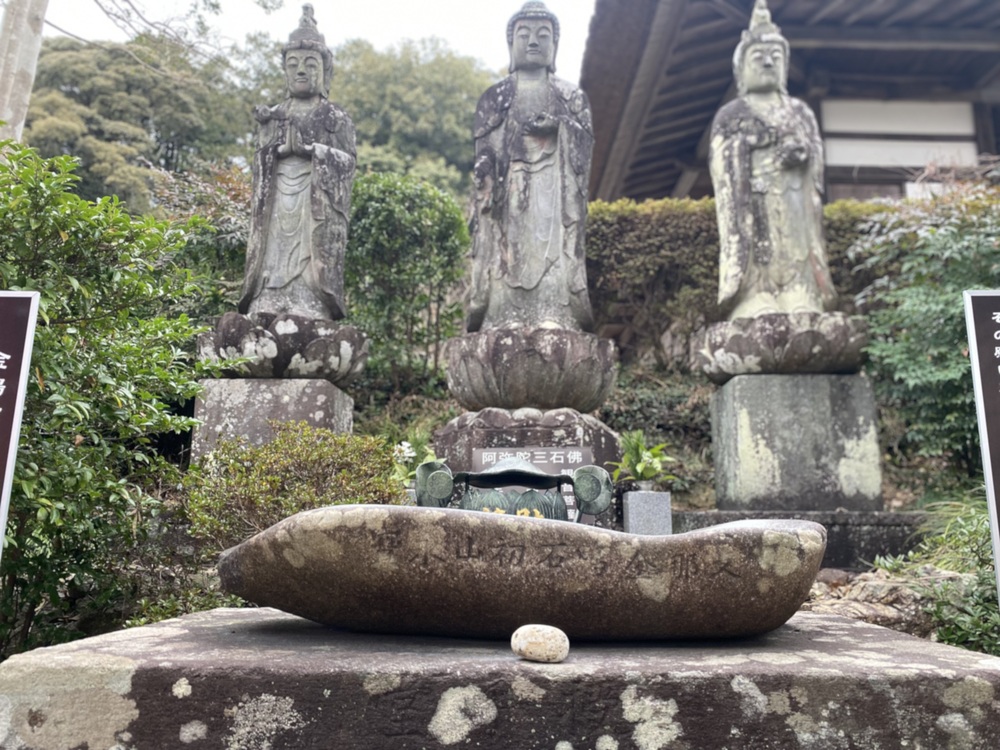
In short, a series of events involving business success and reports of large lottery winnings drew many people to the temple, and over time, it became known as a place for good fortune and prosperity.
This is just a personal opinion, but while listening to this story, I found myself thinking strongly about something.
Gods, the land, stones (nature), and even people all seem to carry some kind of energy to a greater or lesser extent, and I felt again how important it is how we perceive and make use of that energy.
By the way, the Kinmei Stone makes a different sound depending on who strikes it.
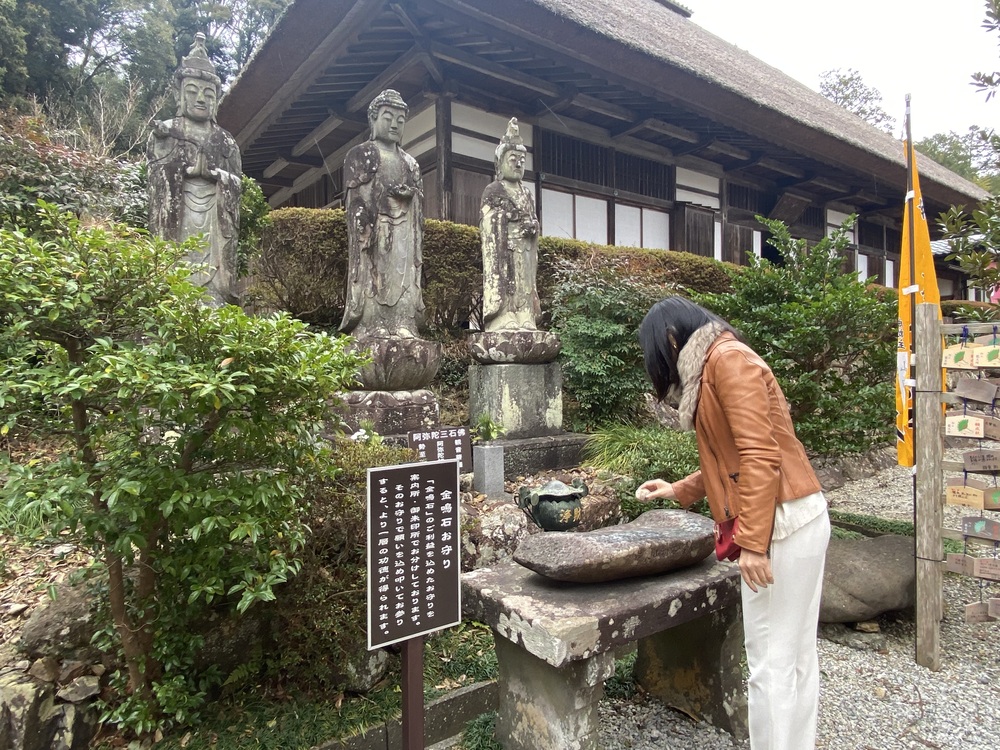
People with a pure heart are said to produce a clear, pure sound.
Of course, as human beings, everyone has desires.
But don’t you also want to be someone who can make a beautiful, clear sound?
By the way, there is actually a technique for producing a better sound, which we were told about.
Rather than hitting it with force, the idea is to gently let the stone fall against the Kinmei Stone.
With the feeling of softly receiving its bounce back, a clear and pleasant sound is said to be produced. (Yes… this is a secret.)
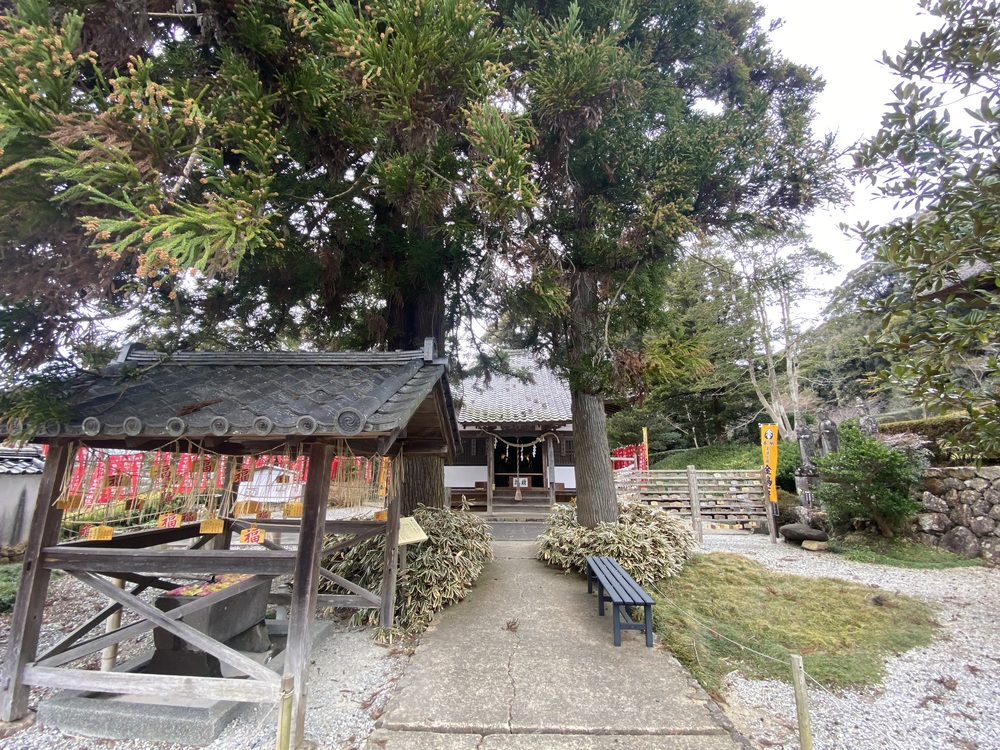
After ringing the Kinmei Stone, you pass through two large trees standing side by side.
Normally, temple grounds are walked in a counterclockwise direction, so this route may feel slightly reversed.
However, these two large trees are said to be regarded as a symbolic torii gate.
The flowers at the purification fountain (Chozuya) are also beautifully maintained, and there was even a faint, pleasant fragrance in the air.
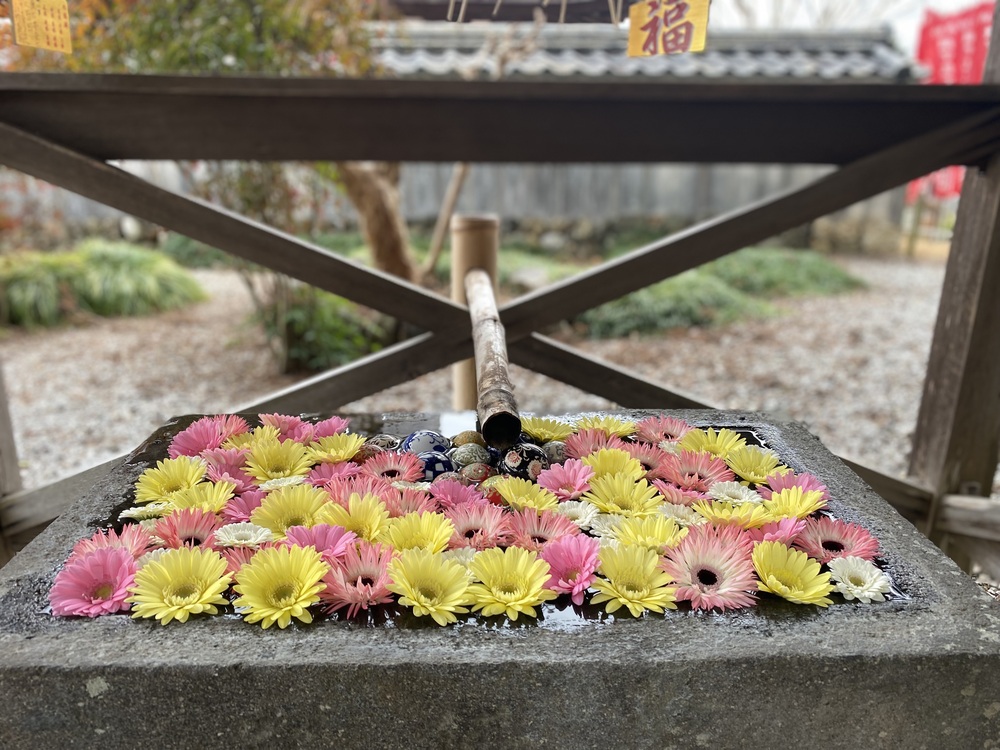
As someone who has the opportunity to visit many temples, shrines, Buddhist sites, and even religious places overseas each year, there are moments when you can clearly feel a shift in the “atmosphere.
When entering the temple grounds here as well, the air already felt slightly different.
However, the strongest sense of that change seems to be around Ryūbundō Hall and the Kinmei Stone, extending toward the area of the two large trees.
Perhaps this is exactly why such places are often referred to as “power spots.”
After hearing that, it makes you want to have an amulet of your own, doesn’t it?
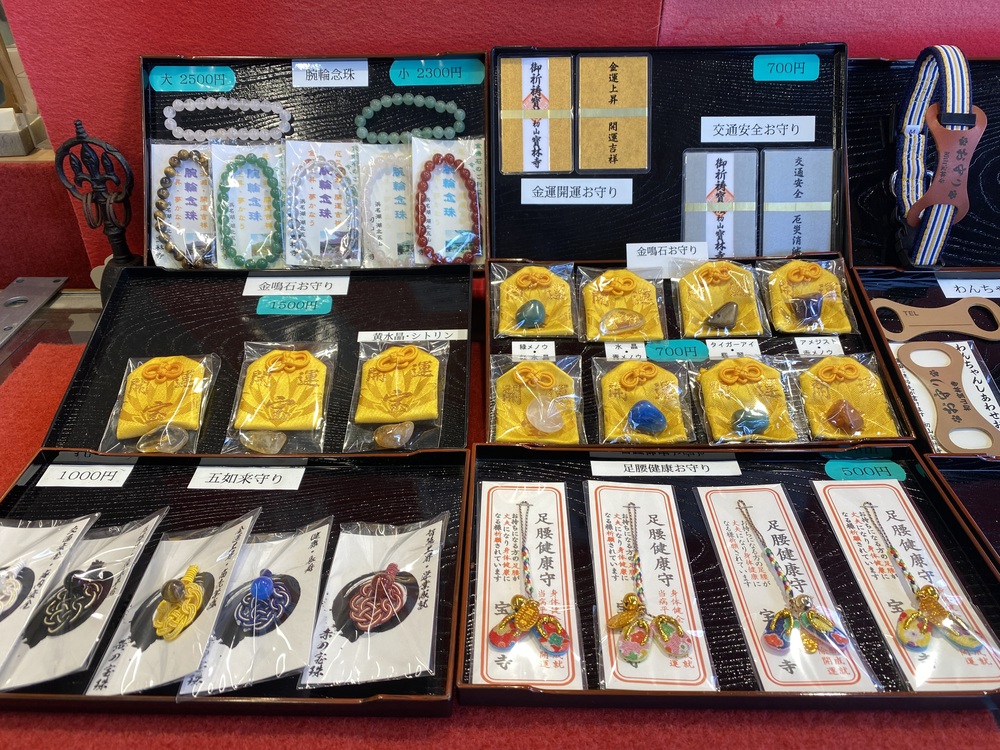
There are many options available, but the one I chose was the Kinmei Stone amuletwith yellow crystal (citrine)!
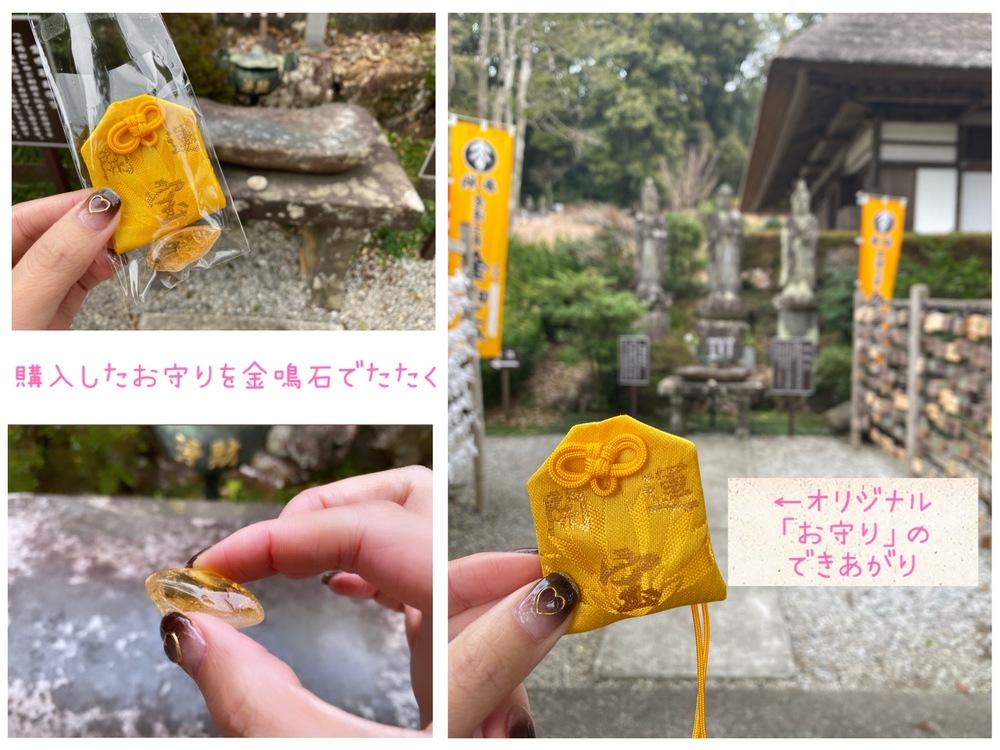
You can intuitively select a stone from several options, make a wish at Ryūbundō Hall, and then strike the Kinmei Stone with your chosen stone to complete your own original amulet.
It also makes a wonderful souvenir or a gift to share with someone special.
Why not visit at least once and experience it for yourself?
Information
Shosan Hōrin-ji Temple
Address: 65-2 Nakagawa, Hosoe-cho, Hamana-ku, Hamamatsu
Parking: Free
Admission fee: Adults (high school students and above) 400 yen / Children 200 yen
Opening hours: 10:00 AM–4:00 PM
Official website: https://t-box.jp/shosan/
*The information in this article is subject to change.
Akiha Shrine: A Hidden Sanctuary of Nature and Faith in Hamamatsu